Some of the most revealing stories are preserved not in chronicles, but in inventories.
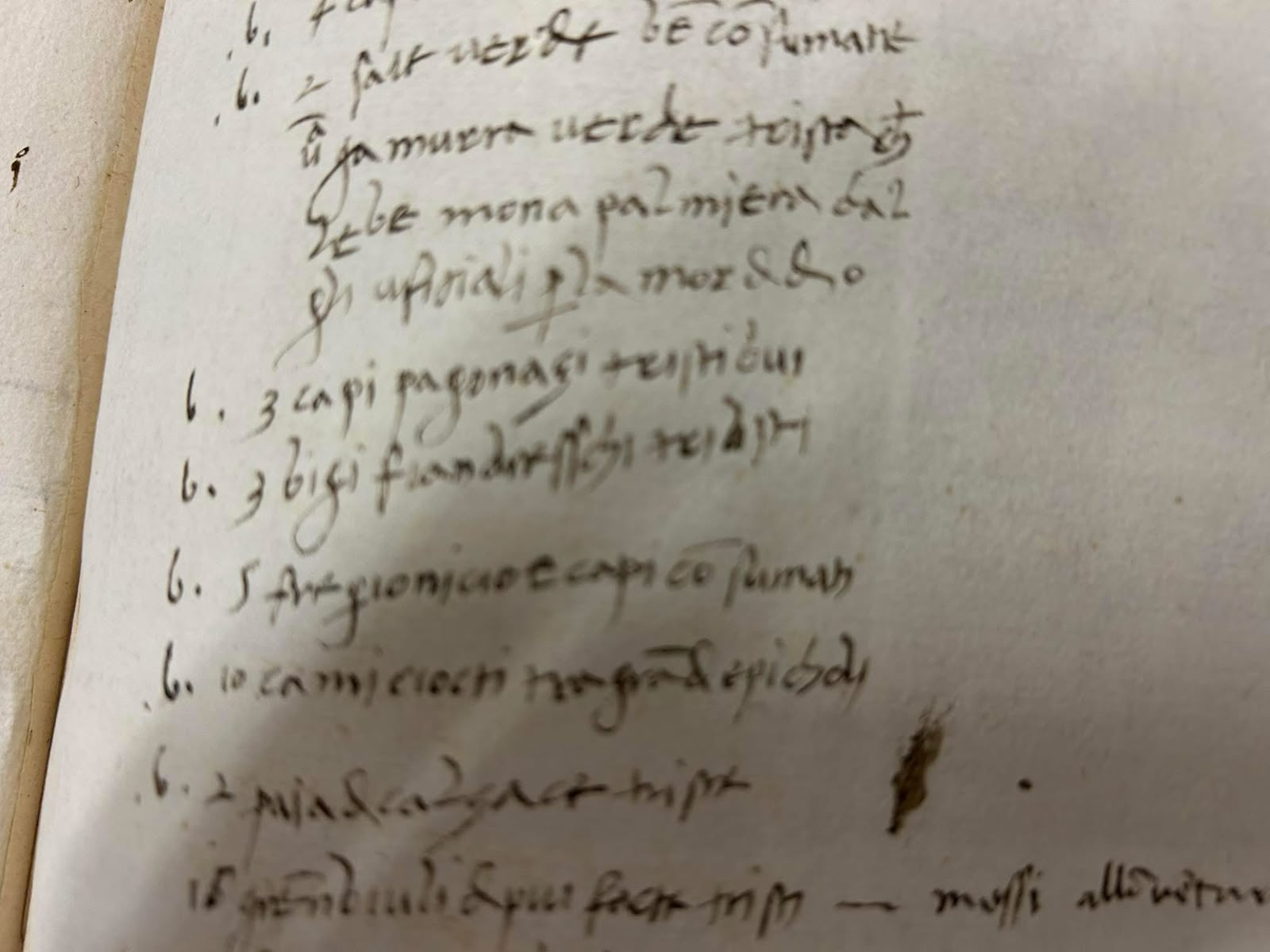
While conducting research in the archive of the Venerable Archconfraternity of the Misericordia of Florence — an archive that has only recently opened its doors to scholars and is accessible by appointment only — I came across records documenting the aftermath of the plague outbreak of July 1499.
Many of those admitted to the Hospital of San Sebastiano and San Rocco died within only two or three days. Their belongings were collected by the hospital attendants or the physician and entrusted to the priest of the plague (prete del morbo), an official of the Misericordia. After a period of custody in the munizione (the confraternity’s storehouse), these possessions were redistributed to the poor and those in need. Before being stored, however, every object was carefully inspected and its condition recorded. One inventory reads:
“...3 dark purple garments, worn and poor; 3 grey Flemish garments, worn; 5 doublets, that is, garments completely worn out...” (...3 capi pagonazi tristi bui 3 bigi fiandresschi (sic) tristi 5 fregioni cioe capi consumati...)
The language is striking in its simplicity and precision. These brief notes reveal not only the condition of the clothing but also a world in which garments were worn, repaired, and used until they were almost beyond recovery. In the aftermath of the epidemic, even these humble possessions retained value through redistribution, offering a powerful insight into the material culture of poverty, charity, and everyday life in Renaissance Florence.